 SpecFit
Men's glasses for the office
Office glasses have one job beyond correcting your eyesight. They need to survive video calls, long screen days, and being looked at by colleagues five days a week. They must not become a distraction. That rules out some choices that look fine in a shop mirror.

Three things that matter for all-day wear
A shop mirror only tells you how a frame looks for a minute. It does not tell you how it wears for eight hours, on a screen, on camera. Three things decide that.
| What | Why |
|---|---|
| Weight | A heavy frame is fine for an hour in a shop. Over eight hours a day it presses on the nose and behind the ears. Titanium and thin acetate stay comfortable longest. |
| Lens glare on video calls | A glossy or curved lens front catches window and monitor light in video calls. Ask for an anti-reflective coating, regardless of frame choice. |
| Stability | A frame that slides down while you look at a lower monitor means constant pushing-up. That reads as fidgety on camera. Fit matters more here than in casual settings. |
Shapes and materials that read as professional
Four options that hold up in a boardroom and at a desk.
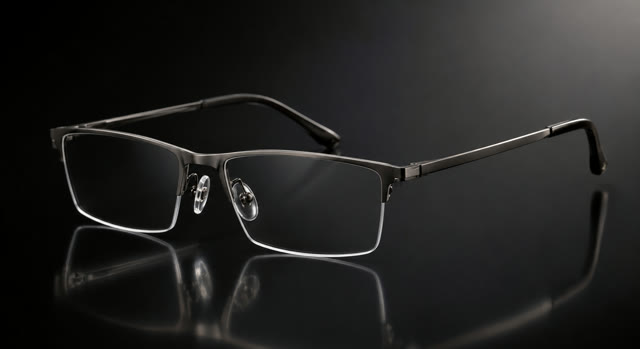
- Slim titanium. Minimal and clean. It works in every room, from boardroom to desk.
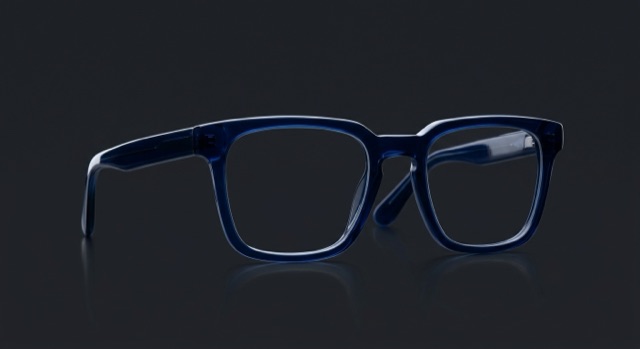
- Square, navy. A considered colour choice. It is more distinctive than black without drawing attention.
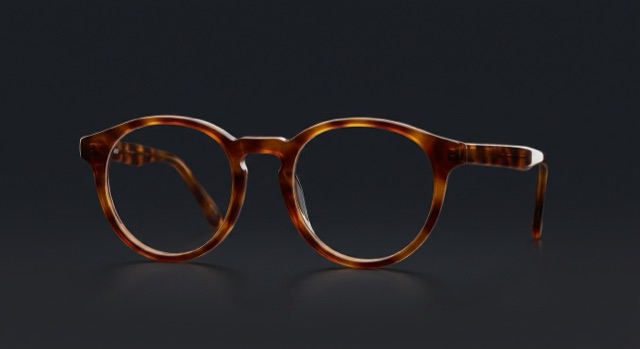
- Round tortoise. The safest colour in eyewear. It reads as put-together in nearly any context.
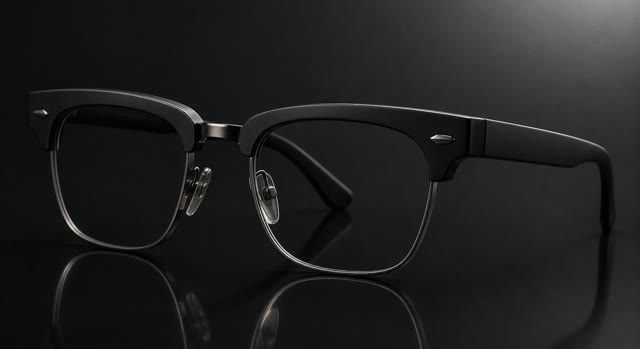
- Browline. More character than a plain rectangle, while staying within professional norms.
SpecFit renders any of these on your real photo, so you can judge how a colour or shape actually reads on your face, and in your normal lighting, before ordering something you will wear at a desk five days a week.
What to avoid at work
- Bright or novelty colours. In most workplaces they read as a personal statement, not a professional one.
- Very heavy or oversized frames. In a formal setting they can look like a fashion choice rather than a practical one.
- Tinted or photochromic lenses that darken indoors under fluorescent or LED lighting. They read oddly on camera and in person.
- Any frame that is visibly loose or crooked. A frame that needs constant adjusting is more noticeable on a video call than in person.
The video call test
Before you commit to a pair, look at yourself through your laptop's own camera, not just a mirror. Screen lighting and compression change how a frame reads. A subtle colour can look flat, and a glossy finish can catch glare that a mirror never shows. This is a five-minute check worth doing before you order.
One pair is rarely enough
Many people who wear glasses daily keep two pairs in rotation: a primary pair and a backup. That way, a broken hinge or a scratched lens does not mean a day without correction. If your budget allows one indulgence, make it a backup pair, not a fancier version of the same pair.
SpecFit renders any frame on your own photo before you order it. This lets you judge how a colour or shape actually reads. The fit check is free.

Questions
What is the most professional glasses colour for men?
Black and tortoiseshell are the safest and most versatile. Navy is a considered step beyond black without standing out.
Are titanium frames worth it for office wear?
For daily all-day wear, generally yes. The weight difference over eight hours is the main reason people choose it.
Should I get anti-glare coating for video calls?
Yes. A glossy or curved lens catches window and monitor light on camera. Anti-reflective coating removes most of it, regardless of frame choice.
Is it worth having a backup pair of glasses?
For daily wearers, yes. A spare pair means one broken hinge or scratched lens does not cost you a full day of correction.