 SpecFit
Glasses for big heads and wide faces
Most people who struggle with glasses falling off, or feeling tight at the temples, do not have an unusual head. They are wearing a frame sized for someone else. A man is often told his head is "big", when the real problem is simpler: the frame in front of him was built narrow. The fix is a wider frame. It is not a smaller face.

What "wide" actually means
Frames are not labelled small, medium, or large. They are labelled in millimetres, stamped small on the inside of the temple arm. Four of those numbers matter here.
| Measurement | What to look for |
|---|---|
| Face width (temple to temple) | Compare this against the frame's total width. The frame-numbers guide explains where to find that figure on the frame itself. |
| Frame width 145mm+ | Most standard frames run 130 to 140mm in total width. Look for frames marketed explicitly as wide-fit or XL. |
| Temple length 145-150mm | Standard temple length is 135 to 145mm. Short temples on a wide head pinch behind the ears before the front even feels tight. |
| Bridge 18-20mm+ | A narrow bridge on a wide face sits low and off-centre. |
Your own face width is the one number here you cannot read off a box. SpecFit measures it from a depth scan, in real millimetres, so you know your number before you shop instead of guessing from how a photo looks.
Wide and extra-wide glasses size chart
Retailer labels vary, so filter by total frame width whenever it is available. Use these bands as a starting point.
| Fit label | Total frame width | Typical temple length | Who should try it |
|---|---|---|---|
| Standard large | 139 to 144 mm | 140 to 145 mm | A slightly wider-than-average face |
| Wide | 145 to 149 mm | 145 to 150 mm | A broad face or arms that flare on standard frames |
| Extra wide | 150 to 154 mm | 145 to 155 mm | A clearly broad face or head |
| XXL | 155 mm and up | 150 mm and up | When 150 mm frames still pinch at the temples |
If a store lists only lens width, read the full glasses size chart before estimating total width. Thick rims and chunky hinges can add several millimetres beyond the printed lens and bridge numbers.
How to tell if your current glasses are too narrow
You do not need a tape measure to spot a frame that is fighting your face. Look for these signs by the end of an ordinary day.
- Red marks. You see marks on your temples, above your ears, at the end of the day.
- Flared arms. The arms splay outward instead of sitting parallel to the sides of your head.
- Constant pushing. You push the glasses back up your nose again and again through the day.
- A gripped look in photos. The frame looks like it is gripping your face. Your cheeks bulge slightly at the hinge.
Shapes that carry width well
A wide face does not need a small frame to look balanced. It needs a shape that puts its width to good use.
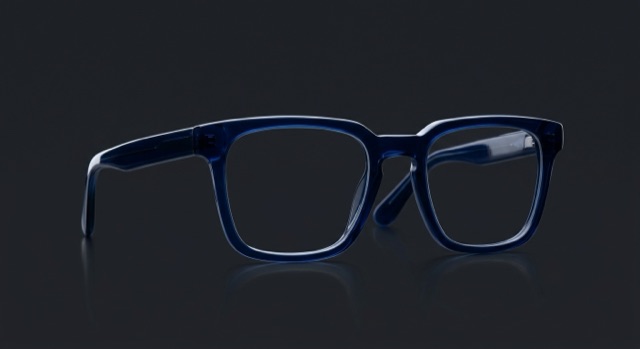
- Square, navy. A strong rectangular shape reads as proportionate rather than oversized on a wide face, because the frame's own width matches the face instead of fighting it.
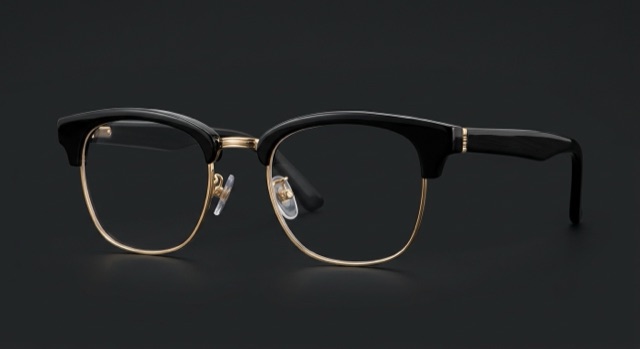
- Browline. The heavier top bar carries visual weight well at a larger scale.
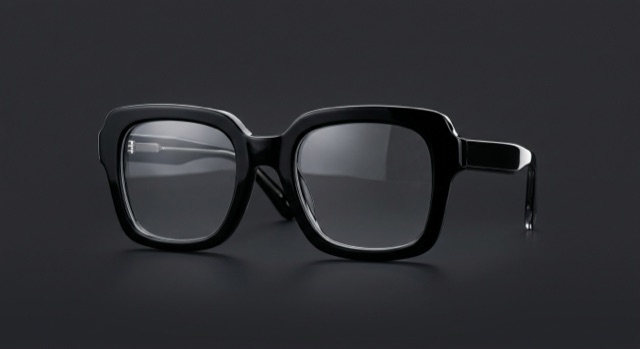
- Oversized. Built wide from the start, so nothing needs to be stretched to fit.
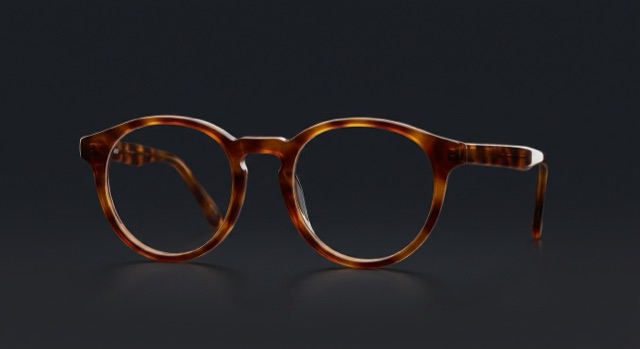
- Round. Works well if your features are soft. A wide round lens avoids the pinched look of a small round lens stretched over a big face.
Where to actually find wide-fit frames
Most mainstream retailers max out around 140mm total width, whatever shape you pick. That ceiling is a stock decision, not a rule of optics, so it is worth searching past it.
Search specifically for "wide fit", "XL", or "big and tall" collections. Several specialist retailers carry these ranges, even when their main catalogue does not go past standard width. A man who has been steered toward the "novelty size" shelf for years is often just shopping in the wrong section.
Titanium and memory-metal builds are worth the extra cost here. A wide frame flexes more under daily use, going on and off, being pushed into a bag, sat on by accident, and it needs to hold its shape through all of that. Standard acetate can do it too, but the sturdier the hinge and the material, the longer a wide frame stays true.
SpecFit measures your face width with the iPhone depth camera. The measurement is in real millimetres. Paste a link to any frame and the fit check scores its width against your measured face, for free, before you spend a credit on the render.

Questions
What frame width counts as "wide fit"?
Generally 145mm total width or more, though it varies by brand. Compare it to your own measured face width, not to a size label.
How do I measure my face width at home?
Use a soft tape measure from temple to temple at the widest point. For a millimetre-accurate reading, use a depth scan instead.
Are wide-fit glasses more expensive?
Often, slightly. Wide fit is a smaller specialist category, and it sometimes needs sturdier hinges and materials.
Can an optician widen a frame that is too narrow?
A little. A metal frame can be adjusted a few millimetres. Acetate has limited give, so start with the right size.