 SpecFit
Best frames for a strong prescription
Most guides start with your face shape. If your prescription is strong, start with the lens instead. Your prescription decides which frames are physically sensible. Only then does taste choose between them.
Ask your optician this first
Before you fall in love with a frame, ask one question:
"Does my prescription limit what frame depth, curve, or rim style I can have?"
The answer takes ten seconds and saves you from ordering a frame that cannot be made properly for your eyes. Opticians rarely volunteer it, because most customers never ask.
Why strong lenses get thick
It helps to know which end of the lens is the problem, because short sight and long sight behave differently.
| Prescription | Lens shape | Where it is thick |
|---|---|---|
| Short sight (minus) | Thin in the middle, thick at the rim | The edges |
| Long sight (plus) | Thick in the middle, thin at the rim | The centre |
Most of the advice below is about short sight, because a thick edge is visible from the side and in photographs. If you are long-sighted, your lens bulges forward instead, and a deeper, well-fitted frame with a flatter front handles it better than a tiny one.
Frames that work
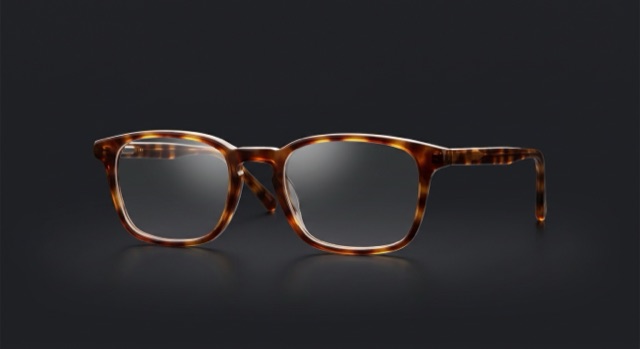
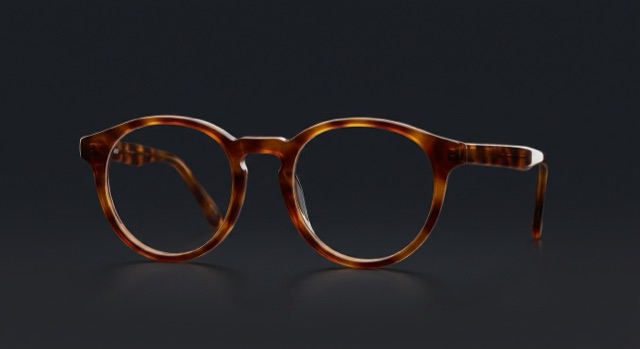
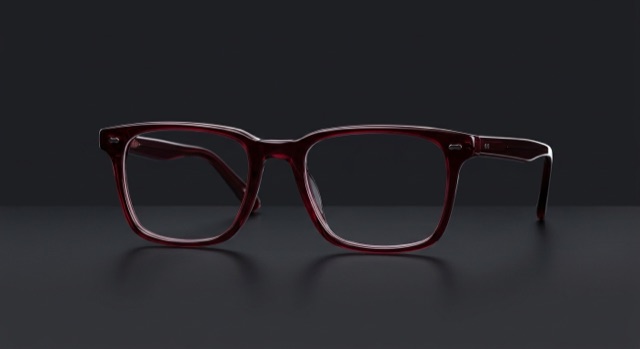
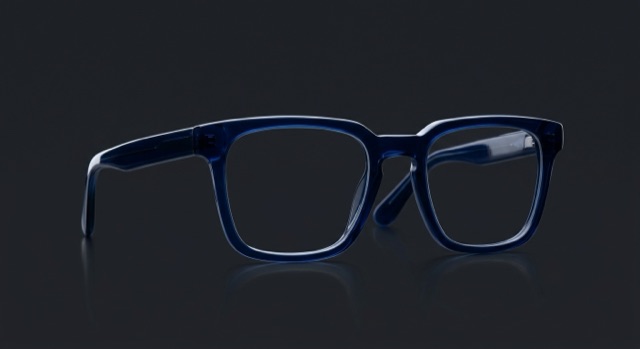
- Full rims. The rim covers the lens edge. This is the single biggest visual difference you can make.
- Small to medium lens widths. Less lens means less distance from the optical centre, so a thinner edge.
- Round and oval shapes. A circle has no far corners. Rectangles are thickest at the outer corners, which is where the eye lands.
- Flat fronts. A strongly wrapped or curved front makes the edge thicker and can distort the prescription.
- Acetate, titanium, or memory metal. Strong lenses are heavy. These hold their shape; thin wire bends over time.
Frames to avoid
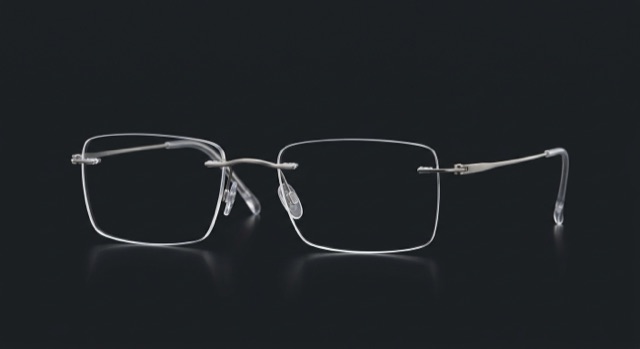
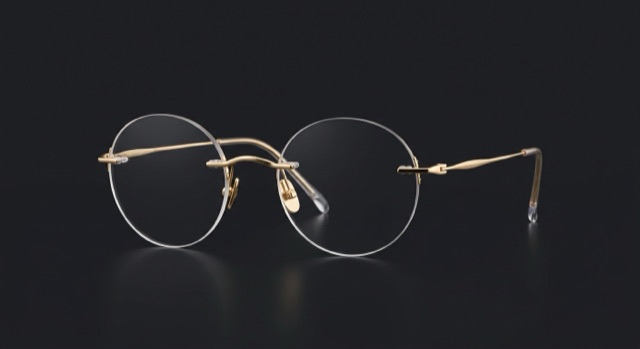
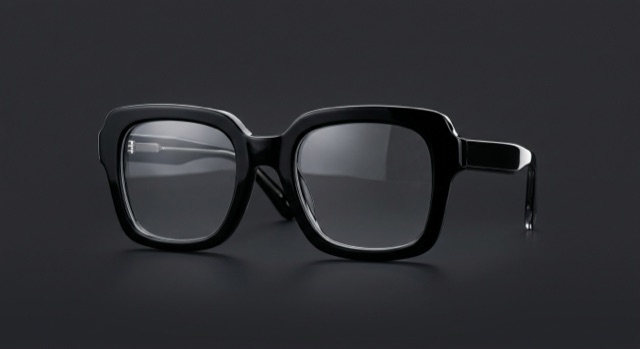
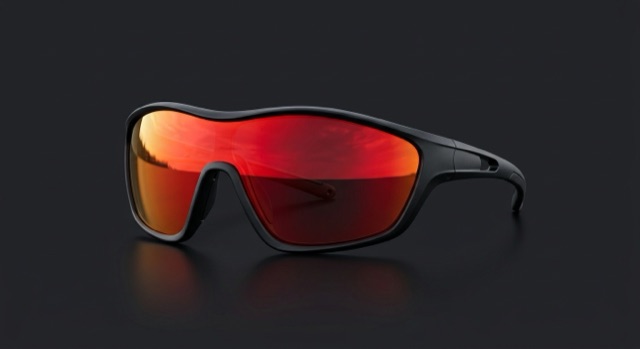
Rimless and semi-rimless show the entire lens edge, which is the thickest part. They also mount through drilled holes, and a heavy lens puts more stress on that mount.
Oversized frames multiply the problem: more lens in every direction, and a thicker edge at every point of it.
Strongly curved or wrapped fronts thicken the edge further, and at high powers the curve fights the prescription itself.
Two details that do more than the frame
1. Ask for a high-index lens
Lens materials are graded by refractive index. A higher index bends light more strongly, so less material achieves the same correction. Standard plastic is 1.50. High-index options such as 1.67 and 1.74 are noticeably thinner at the same power. They cost more, and they reflect more light, so pair them with an anti-reflective coating. Ask for aspheric surfaces too: they flatten the profile without changing the power.
2. Get your PD right
Lenses are cut so their optical centres sit in front of your pupils. If the frame is much wider than your face, the lens has to be decentred to line up, and decentring adds thickness on one side and can introduce unwanted prism. A frame whose width actually matches your face is a thinner-lens decision, not just a comfort one.
That means the numbers matter here more than anywhere else. Read the size stamp, and know your own PD before you order.
The one place the usual advice conflicts
If you wear progressives and have a strong prescription, you will hit a contradiction. Progressive lenses need a deep frame. Strong prescriptions favour a small one. Semi-rimless is often suggested as the escape route, because it gives depth without bulk, but semi-rimless is the thing a strong prescription should avoid.
The workable answer is a small-to-medium full-rim frame that is deep rather than wide, in a high-index material, with a short-corridor progressive design. Take both requirements to your optician together rather than solving one and discovering the other at the counter. There is more on the depth side in the progressive lens guide.
SpecFit reads a frame's size stamp and checks the width against your measured face. Paste a link to any frame, and SpecFit tells you in plain words if it runs wide. The fit check is free.

Questions
Do smaller glasses really make lenses thinner?
For short sight, yes. Thickness grows toward the edge, so a lens that stops sooner has a thinner edge. Width matching your PD matters as much as raw size.
Can I wear rimless with a strong prescription?
Usually a poor choice. Rimless shows the whole edge and relies on a drilled mount carrying a heavy lens.
Will an anti-reflective coating help?
Visually, yes. Thick and high-index lenses reflect more, and those reflections read as concentric rings in photos and under indoor lighting. A coating removes most of them, so the lens looks clearer even though it is the same thickness.