 SpecFit
How to clean your glasses
A scratched lens cannot be repaired. It can only be replaced. Most scratches do not come from accidents. They come from cleaning, done the wrong way, day after day. The right method costs nothing and takes twenty seconds.
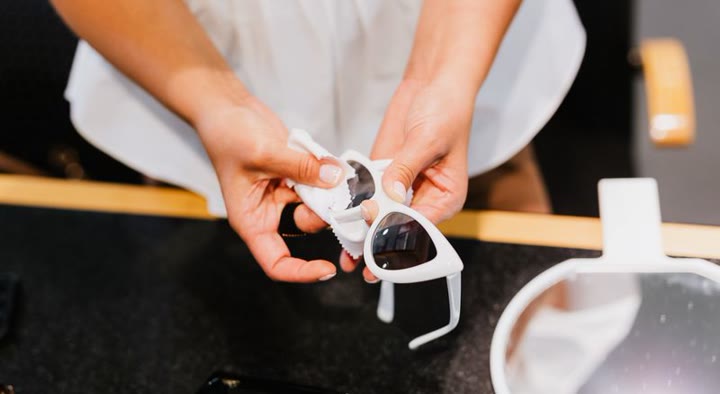
The right way, daily
Follow these four steps every time. The order matters, because rinsing first is what protects the lens.
- Rinse your glasses under lukewarm running water first. This carries loose grit off the lens before anything touches it.
- Put one drop of mild washing-up liquid on your fingertips. Rub both sides of each lens and the nose pads gently.
- Rinse again, until the soap is gone.
- Shake off the water and dry with a clean microfibre cloth.
Lens spray sold by opticians works just as well. Use it when there is no tap nearby, such as at your desk or in the car.
What never to use
- Window cleaner, ammonia, bleach, vinegar, or alcohol. These strip anti-reflective coatings over time, even if nothing looks wrong at first.
- Hot water. It can damage lens coatings and warp acetate frames.
- Paper towels, tissues, and your shirt. Dry paper and dry cloth drag grit across the lens. That grit leaves micro-scratches you will notice later, in bright light.
- Dry rubbing of any kind. Rinse first, always. There is no exception worth the risk to the lens.
Wash the microfibre cloth itself regularly. Do not use fabric softener, since it leaves a residue that smears the lens. A dirty cloth grinds old grit into the glass, which defeats the point of using one.
Handling and storage
Take your glasses off with both hands, holding both arms at once. Taking them off one-handed twists the hinge with every removal. Over time that twist splays the frame out of shape.
Store your glasses in a hard case. When you set them down without a case, rest them lenses-up, so the lenses never touch the surface.
Never leave glasses on a car dashboard or in a hot parked car. Heat warps acetate frames and can craze lens coatings, and the damage does not reverse.
Small jobs that keep frames new
A few small checks, done occasionally, keep a pair of glasses feeling new for years.
| When | What |
|---|---|
| Loose screws | An optician tightens them, usually free of charge. |
| Worn nose pads | Cheap to replace, and the glasses feel new again. |
| Frame sits crooked or slips | An optician adjusts the fit. Never bend the frame back yourself, since it can snap. |
| Prescription feels off | Get your eyes tested rather than tolerating the strain. |
SpecFit checks a replacement frame against your measured face before you buy it. The fit check is free, and you can also see the frame rendered on your own photo.

Questions
Can I use alcohol wipes on my glasses?
Avoid alcohol wipes on coated lenses. Alcohol degrades anti-reflective coatings over time, even when the damage is not visible straight away. Soap and water is safer, and it costs nothing.
Why do my lenses have fine scratches?
Fine scratches almost always come from dry-wiping grit off the lens, usually with a shirt or a tissue. Dust and grit act like sandpaper when you rub them across dry glass. Rinse your lenses under water before every wipe, so the grit runs off instead of dragging across the surface.
Is it OK to leave glasses in the car?
No. Heat inside a parked car warps acetate frames and can craze lens coatings. Keep your glasses with you, or store them in the case somewhere cool.
How often should nose pads be replaced?
Replace nose pads when they turn yellow or go hard. They are cheap, and an optician fits new ones in minutes.