 SpecFit
How should glasses fit? A 10-point checklist
Glasses should sit level, stay still and feel almost unnoticeable. Check the width, bridge, temples, pupil position and brow line first; then check level, cheek and lash clearance, stability and all-day comfort.
The 10 checks
| Check | What right looks like |
|---|---|
| Width | Frame width within 2 - 3 mm of your face width |
| Bridge | Rests on the nose without pinching or sliding |
| Temples | Run straight back, bend just past the ear |
| Pupils | At or just above the centre of each lens |
| Brow line | Frame top follows the brows, eyebrows stay above it |
| Level | Both lenses sit at the same height |
| Cheeks | Lower rims do not lift when you smile |
| Lashes | Eyelashes do not brush the lenses |
| Stability | The frame stays put when you look down |
| Comfort | No hot spots after 30 minutes |
1. Width
Measure your face temple to temple. The frame's total width should land within 2 to 3 mm of that. A frame that is too wide slides and looks oversized. A frame that is too narrow presses at the temples and perches forward. Total width is rarely printed on the frame, but you can estimate it from the size stamp: two lens widths, plus the bridge, plus about 12 mm.
2. Bridge
The bridge carries most of the frame's weight. It should rest on your nose without pinching and without daylight. If red marks appear beside your nose, the bridge is too narrow. If the frame keeps sliding down, it is usually too wide. Bridge width is the middle number of the stamp: 17 in 54□17 140.
3. Temples
The arms should run straight back to your ears without pressing your head, then bend down just past the ear. An arm that bends before the ear pushes the frame forward. An arm that never touches down lets the frame slide. Standard lengths run 135 to 145 mm, and a good optician can adjust the bend.
4. Pupils
Look straight ahead in a mirror. Each pupil should sit at or just above the horizontal centre of its lens, roughly in the upper third. This is where your PD meets the frame: lenses are cut so their optical centres line up with your pupils. If your eyes sit low in the lens or far off centre, the frame does not match your PD and face width.
5. Brow line
The top of the frame should follow the line of your eyebrows, close but never covering them. Eyebrows inside the lens read wrong to everyone, instantly. A frame that sits too low leaves a gap that makes the face look longer.
6. Level
Look straight into a mirror. The top of the frame should be level, with both pupils sitting at the same height inside their lenses. One side higher than the other usually means the temple bend or nose pads need adjustment. It does not always mean the frame size is wrong.
7. Cheek clearance
The lower rim should clear your cheeks at rest and should not lift the glasses when you smile. Contact usually means the lens is too deep, the bridge sits too low, or both. This matters especially with oversized, aviator and low-bridge frames.
8. Lash clearance
Your eyelashes should not brush the lenses. Constant contact smears the lens and can feel irritating. Adjustable nose pads can move a frame forward; otherwise look for a bridge designed to create more space.
9. Stability
Look down, nod once, and turn your head from side to side. The frame should stay in place without gripping. Sliding points to a bridge or temple problem. Movement only on one side usually points to an adjustment problem.
10. All-day comfort
A frame can pass a mirror test and still hurt later. Wear it for at least 30 minutes. Pressure at the temples means it is too narrow; soreness behind the ears means the temple bend is wrong; nose marks mean the weight is not being distributed evenly.
Signs a frame does not fit
- Red marks beside your nose after an hour of wear.
- The frame slides when you look down.
- Pressure or soreness behind the ears or at the temples.
- You see the frame's edge in your field of view.
- You keep pushing the glasses back up.
Check the fit before you own the frame
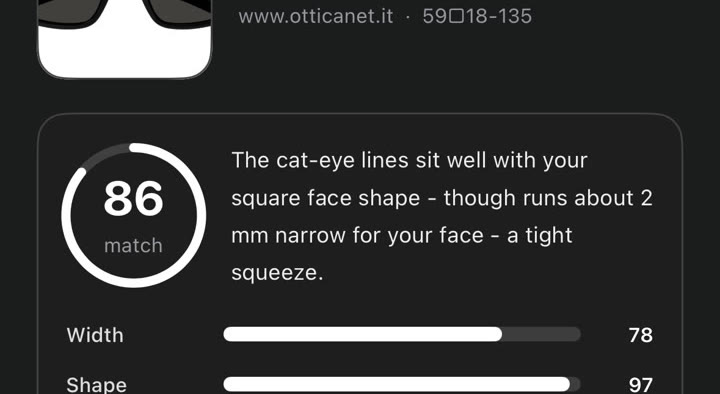
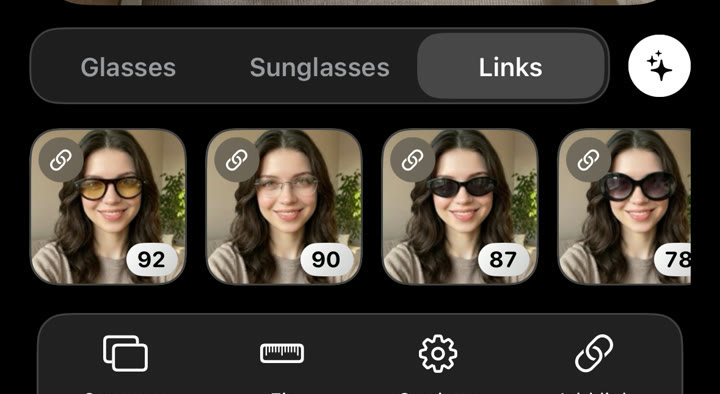
In a shop, run the five checks in the mirror. Online, you cannot. SpecFit closes that gap: it measures your face once, then scores any frame you paste against those measurements. Width, shape, and colour are rated separately, with the verdict in plain words. The fit check is free. Rendering the frame on your face costs one credit.
SpecFit measures your face and checks any frame against it. The measurement is free, and you can see the frame rendered on your own photo.

Questions
Why do my glasses slide down my nose?
Usually the bridge is too wide, so the frame rests lower than designed. Sometimes the temples are too long or splayed. A narrower bridge, adjustable nose pads, or a temple adjustment each fix a different version of the slide.
Should glasses cover my eyebrows?
No. Brows above the frame, always. The frame's top line should follow them closely.
Can a shop fix a frame that is slightly off?
Partly. Temple bends and nose pads adjust. Frame width and bridge width do not. Get the numbers right first, and let adjustment handle the rest.