 SpecFit
Should sunglasses cover your eyebrows?
The answer is yes for sunglasses and no for clear glasses. The two types follow opposite rules on the same face. Here is why, and how to check your own pair.
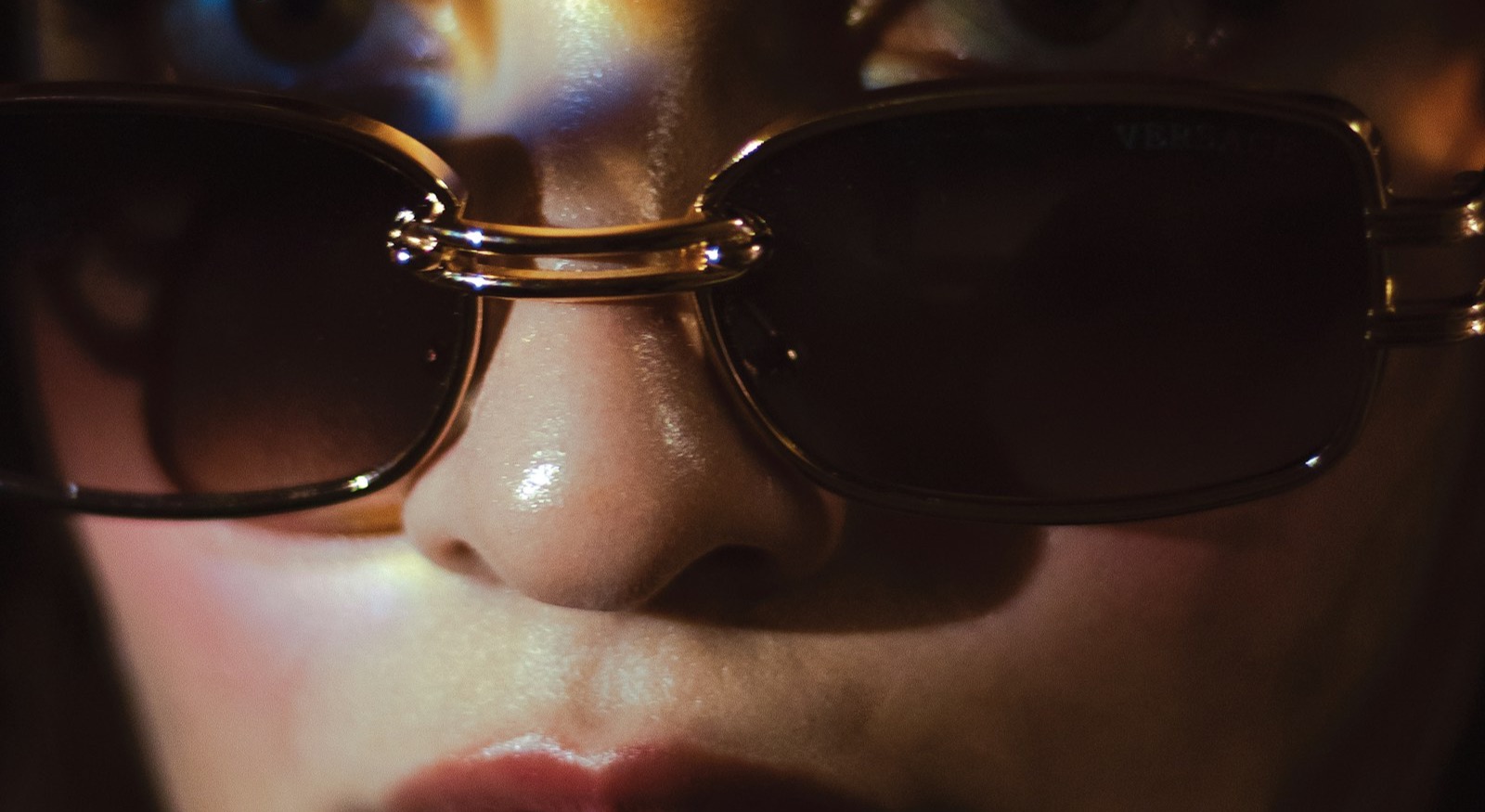
Sunglasses: yes, cover the brow
On sunglasses, the top bar should follow your brow line, or sit at it, or cover it. If your eyebrows show above the top of your sunglasses, the frame is usually too small for your face. This is the classic rule for full-size sunglasses, the kind most people wear. Narrow frames break it on purpose, and the section below explains why that works.
Clear glasses: no, stay below the brow
On clear glasses, the rule flips. The top edge should sit just below your brows, close but not covering them. Brows visible inside the lens read wrong to everyone, instantly. A big gap between brow and frame makes the face look longer than it is. The full fit checklist covers this alongside width, bridge and temple length.
Why the rule flips
On sunglasses, the top edge is a solid line drawn across your face. There is no visible eye above it to soften that line, so the line itself has to sit in the right place, at or above the brow. On clear glasses, the eye stays visible above the frame. A small gap between brow and frame reads as normal, even expected, because the eye is still doing the work of the face.
| Clear glasses | Sunglasses | Narrow sunglasses | |
|---|---|---|---|
| Where the top bar sits | Just below the brow | At the brow line, or covering it | Below the brow, with an even gap |
| Why | The eye is visible above the frame, so a small gap reads as normal | The top edge is a solid line with no eye above it, so the line itself must sit right | A thin lens reads like clear glasses, not a solid shape |
| What a wrong fit looks like | Brow visible inside the lens, or a large gap that lengthens the face | Brow showing above the frame, reading as undersized | Frame wider or narrower than the face, or tilted against the brow line |
Why narrow sunglasses break the rule on purpose
Skinny sunglasses are worn as an accessory more than as sun protection. Thin ovals, slim rectangles and narrow wraparound shields expose the brow on purpose. The brow becomes part of the look, not something to hide.
The brow-coverage rule is a proportion rule for full-size lenses. A big dark shape needs to sit in the right place on the face. A narrow lens is a thin line across the face. It reads closer to a pair of clear glasses than to a full sunglasses shape. That is why the gap above it looks intentional rather than undersized.
Three things still have to be right on narrow sunglasses. Width matters most: the frame should still match face width, within 2 to 3 mm, temple to temple. Position matters too: the lens should sit at eye level, with pupils centred in it, not pushed down the nose. Brow line matters as well: the top edge should run parallel to the brow, at a consistent gap, rather than cutting across it at an angle.
Narrow sunglasses suit strong or well-defined brows, smaller features, and faces where a big lens would overwhelm. They give less coverage from sun and wind than a full-size pair. They are a style choice, not the pair for a long day outside.
A rule of thumb: if the lens is tall enough to cover the brow, it should. If it is deliberately narrow, keep the gap even and the width right.
Brow shape sets the top bar shape
Once the top bar sits near the brow, the shape of that brow decides which frame shape works. Arched brows suit a top bar with some curve, one that echoes the arch. Straight brows suit a straight top bar. Mismatch the two and the face can look off. A straight bar across an arched brow can give the face a permanently surprised look.
This is mostly a sunglasses problem. On clear glasses, the brow stays visible above the frame, so a mismatch between brow shape and top bar barely registers.
How to check it
Stand in front of a mirror and look straight ahead. For sunglasses, your brow should be hidden by the frame, or sit exactly at the top edge. Then raise your eyebrows. The frame should not lift with them. If it does, the frame is resting on your brow ridge rather than your nose, which means it sits too high.
For clear glasses, your brow should sit fully above the frame, with a small gap between the two.
What moves the frame up or down
The height of a frame on your face is set by the bridge, not by the size of the lens. Narrower nose pads lift the frame higher on your face. Wider pads let it sit lower. Bridge width and temple bend do the same job on frames without adjustable pads, and a good optician can adjust both. If your sunglasses leave your brow exposed, changing the pads or bridge often fixes it without buying a new pair.
Lens height matters too, as a rough guide rather than a rule. A taller sunglasses lens, roughly 40 mm and up, usually covers the brow on its own. A short lens, under about 35 mm, rarely does, which is why some sunglasses that fit well width-wise still leave a strip of brow visible on a taller face.
SpecFit renders sunglasses on your own photo. The face scan measures your face with the iPhone depth camera, in real millimetres. Paste a link to any pair and the app reads the size stamp and scores the fit against your face. The fit check is free. Rendering the pair on your face costs one credit.

Questions
Should sunglasses cover my eyebrows?
Yes, or at least the top bar should follow your brow line closely. If your eyebrows show above the top of your sunglasses, the frame usually reads as too small for your face.
Should clear glasses cover my eyebrows?
No. The top edge should sit just below your brows, close but not covering them. Brows visible inside the lens read wrong, and a big gap between brow and frame makes the face look longer.
Why does the eyebrow rule differ between sunglasses and clear glasses?
On sunglasses, the top edge is a solid line across the face with no visible eye above it, so the line itself has to sit in the right place. On clear glasses, the eye stays visible above the frame, so a small gap between brow and frame reads as normal.
How do I fix sunglasses that leave my eyebrows exposed?
Look for a taller lens, roughly 40 mm and up, which usually covers the brow. Nose pad width, bridge width, and temple bend also move the frame up or down your face without changing the lens size.
Is it fine for skinny sunglasses to show my eyebrows?
Yes. Narrow frames are worn as an accessory rather than for sun protection, and they expose the brow on purpose. A thin lens reads more like clear glasses than a full sunglasses shape, so the gap above it looks intentional. Just check the width still matches your face and the top edge runs parallel to your brow.
Should aviator sunglasses cover your eyebrows?
Full-size aviators should meet or slightly cover your eyebrows. If the brows sit well above the double bridge and top rim, the frame usually looks too small or sits too low. See the dedicated guide to aviator glasses and face shape.