 SpecFit
How should sunglasses fit?
Width, bridge, temple length and staying in place. Every fit rule that applies to clear glasses applies to sunglasses too. But sunglasses hide your eyes, so the frame has to carry the whole look on its own. And one rule flips completely.

The brow rule
On clear glasses, the top edge of the frame should sit just below your eyebrows. Your brows stay visible above the frame. That is the standard advice, and it is correct for clear glasses.
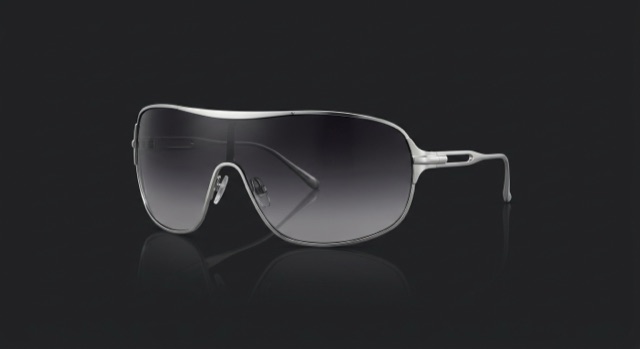
On sunglasses, the opposite applies. The top bar should follow your brow line, or cover it. If your eyebrows peek out above the top of your sunglasses, the frame is reading as too small for your face.
The reason is simple. On sunglasses, the top edge is a solid line drawn across your face. There is no eye visible above it to soften that line, so the line itself has to sit in the right place. On clear glasses, the top edge is a thin frame around an eye that people can still see, so a gap between brow and frame reads as normal, even expected.
Brow shape sets the top bar
Once you know the top bar should sit near the brow, the shape of that brow decides which frame shape works. Arched brows suit a top bar with some curve to it, one that echoes the arch. Straight brows suit a straight top bar.
Mismatch the two and the face can look off. A straight bar sitting across an arched brow, for instance, can make the face look permanently surprised, since the line cuts against the natural curve underneath it. This is specific to sunglasses. On clear glasses, with the brow visible, the mismatch barely registers.
Coverage and light
A good pair of sunglasses blocks light from the sides and from above, not only from the front. Light that sneaks in around the edge of the lens still reaches your eye. Bigger lenses and frames that wrap closer to the face leak less of it. Coverage is about comfort and glare. Protection is a separate matter, and it comes down to one label.
Check the UV label, not the tint
Insist on 100% UVA and UVB protection, usually printed as UV400. Tint darkness and UV protection are not the same thing, and they do not move together.
A dark lens without UV protection can be worse for your eyes than no sunglasses at all. Behind a dark lens, your pupil opens wider to let in more light. If that lens is not blocking UV, more of it reaches your eye than would with no sunglasses on. Check the label, not how dark the lens looks.
Polarisation is a different property again. It cuts reflected glare, the kind that bounces off water, wet roads and car bonnets, and it helps a great deal when driving. But polarisation is not UV protection. A polarised lens can be UV400 rated or not, so check both separately.
The numbers carry over
The size stamp on the inside of a temple, the three numbers for lens width, bridge width and temple length, works the same way on sunglasses as it does on clear glasses. If you already know your size from a pair of clear glasses, you know your size in sunglasses too. The same fit checklist applies to both.
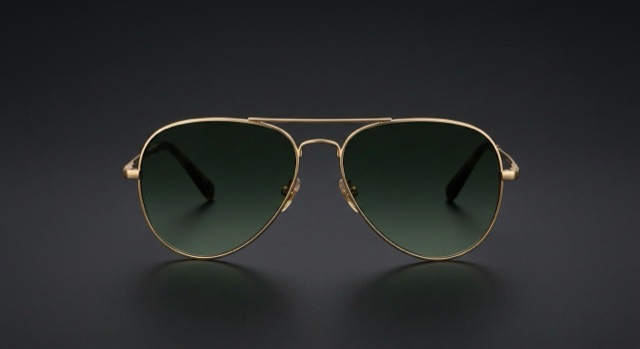
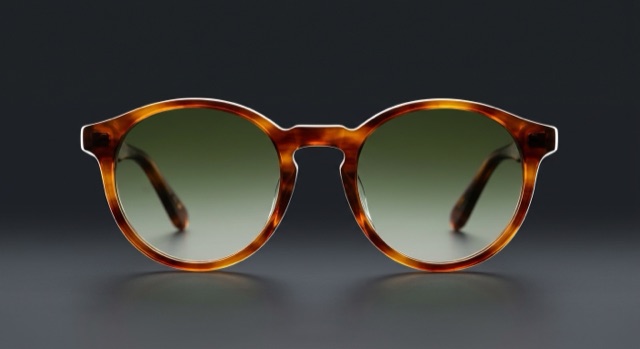
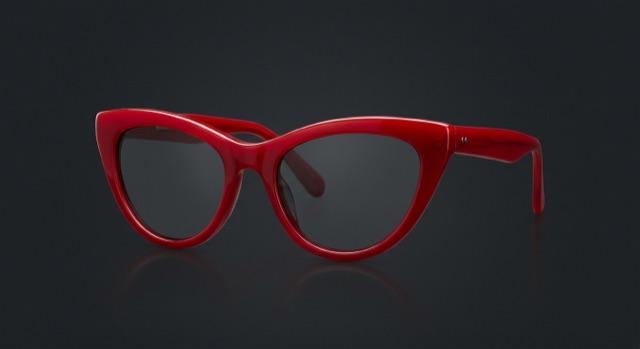
SpecFit renders sunglasses on your own photo, worn and pushed up. Both renders cost one credit. The fit score checks the width against your measured face first.

Questions
Should sunglasses cover my eyebrows?
Yes, or at least the top bar should follow your brow line closely. This is the opposite of clear glasses, where the top edge sits below the brow and leaves it visible. On sunglasses, brows peeking above the frame usually mean the frame is too small.
Are dark lenses without UV protection bad for eyes?
They can be worse than wearing no sunglasses at all. A dark lens makes your pupil open wider, and if the lens is not blocking UV, more of it reaches your eye than would without any sunglasses. Always check the lens is rated 100% UVA and UVB, often labelled UV400.
Do polarised lenses protect my eyes from UV?
Not on their own. Polarisation and UV protection are separate properties of a lens. Polarisation cuts reflected glare from water, roads and other flat surfaces. Many polarised lenses also carry UV400 protection, but check the label rather than assuming one implies the other.
Can I use my glasses size for sunglasses?
Yes. Sunglasses carry the same size stamp as clear glasses, the three numbers for lens width, bridge width and temple length. If you know your size in one, you know it in the other.