 SpecFit
Are virtual try-ons accurate? What they get wrong
Are virtual try-ons accurate? Mostly, for colour and shape. Size is where most tools guess.
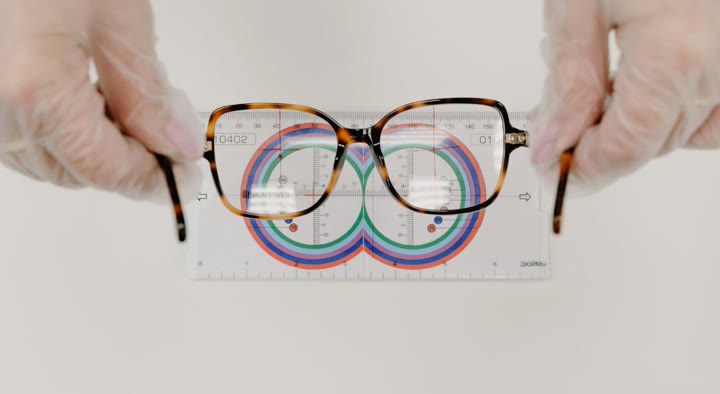
How accurate are virtual try-on glasses, really
A try-on uses two pictures: a frame and your face. Colour and shape only need the frame picture, scaled over your eyes.
Size needs more. It needs your real face width and the frame's real width, compared in millimetres.
- Most tools skip this. They stretch the frame to fit your eyes.
- Result: every frame looks like it fits, even when it does not.
Why frames look too big or too small
A tool that only tracks your eyes misses your temple width.
- Two different frames can look the same size on screen.
- In real life one overhangs, the other pinches.
- The render looks fine. The frame then arrives too wide.
- Or too tight. You feel it at the temples.
What to check yourself
You do not need special tools. A few numbers from the listing cover most of it.
| Check | Tells you | Where |
|---|---|---|
| Frame width vs face width | Overhang or pinch at temples | Compare both widths |
| Lens width | Eye coverage | First number inside temple arm |
| Bridge width | Fit on your nose | Middle number inside temple arm |
| Temple length | Reach over your ears | Last number, usually 135-150mm |
| Pupillary distance (PD) | Lens centres line up with eyes | Optician, app, or face scan |
Frame width vs your face width
Start with the width that matters most: hinge to hinge.
Compare it to your own face at its widest point.
- Too wide: the arms splay out and feel loose.
- Too narrow: you feel pressure within an hour.
Full method in how wide should glasses be? and glasses size chart.
Lens width, bridge and temple length
Every frame has three small numbers stamped inside a temple arm, like 52-18-145.
- First number: lens width.
- Second number: bridge width.
- Third number: temple length.
- All in millimetres, and they never change in a photo.
Read what does 17-140 mean on glasses? and glasses frame numbers explained.
Pupillary distance (PD)
PD, the space between your pupils, lines up the lens centre with your eye. No try-on photo shows it.
- Measure it yourself: with a ruler and a mirror.
- Or use your phone: see measure your PD at home.
- Check phone accuracy: see are PD apps accurate?


Brand try-on tools in general
Most retailer tools work the same way. A camera or photo, with a frame scaled over your eyes.
- Good at: style and colour.
- Not built for: measuring your face.
- Treat it as: a style preview.
- Not as: a size guarantee.
Not loading at all? That is a different problem, covered in virtual try-on not working. For how each try-on method works, read virtual glasses try-on.
A try-on that checks the size for you
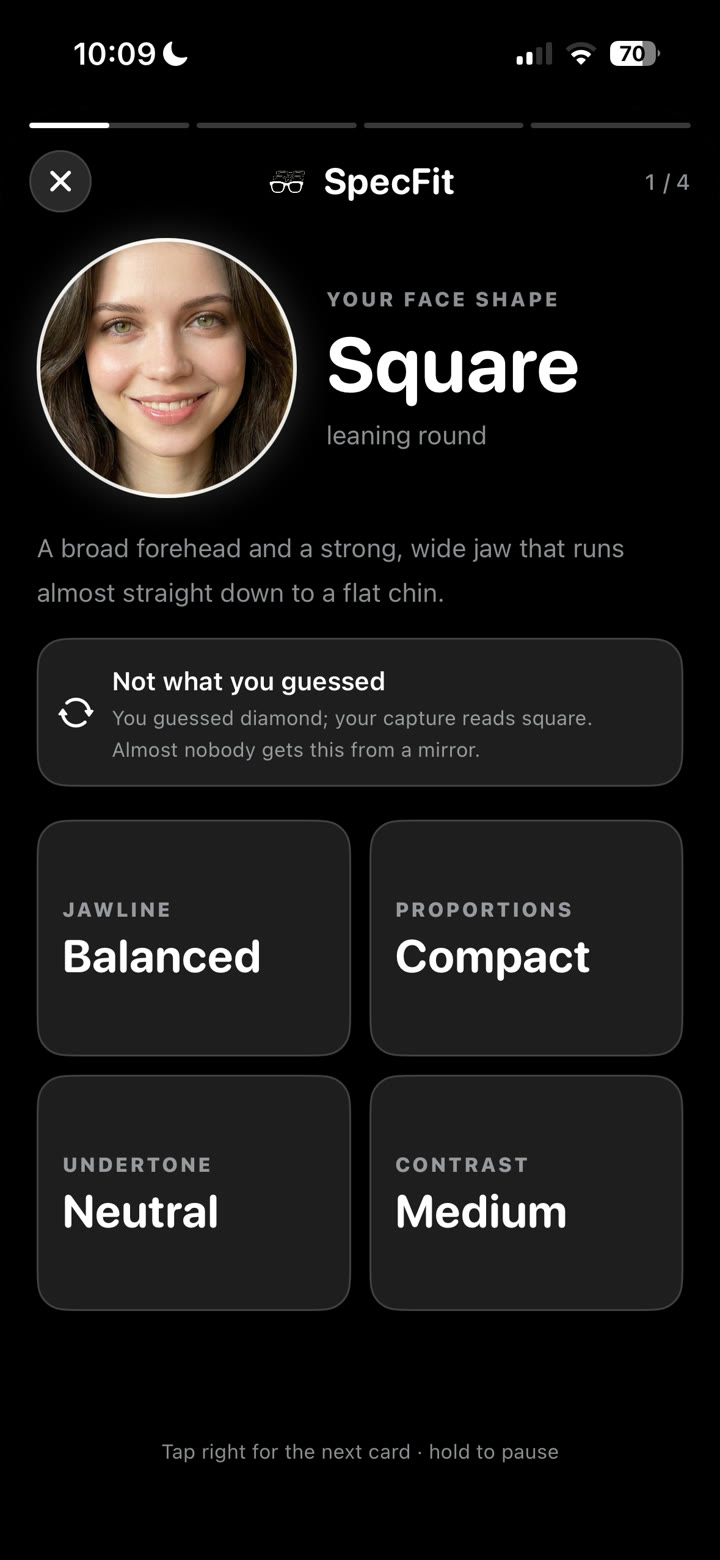
SpecFit starts from a guided 3D scan on a Face ID iPhone. Or a selfie.
- PD: to about 1 millimetre with the scan.
- Face width: read at the same time.
- Bridge and face shape: also read at the same time.
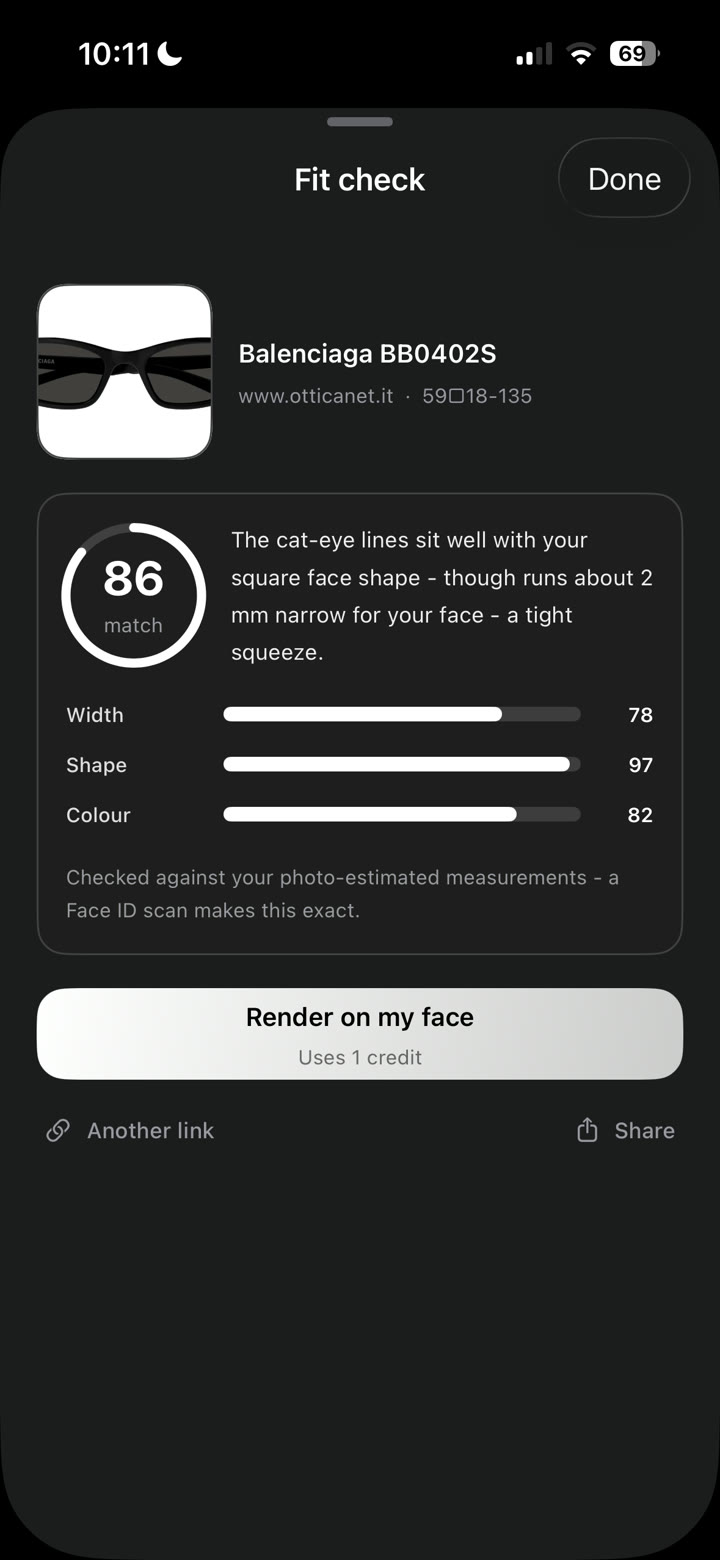
- Fit check: scores a listing or photo against your numbers.
- It is free. No charge to check a fit.
- Try-ons use credits: 3 for $4.99, up to 18 for $19.99.
- No subscription. Credits never expire.
See the size, not just the style. SpecFit measures your face. Then it checks if a frame is the right width.

Questions
How accurate are virtual try-on glasses?
They are good for colour and shape. They are weak on size. Most tools do not know your real face width.
Is virtual try-on glasses accurate for sizing?
Not by itself. Check the frame's lens width, bridge, and temple length. Use the listing's own numbers, not the screen.
Are online glasses accurate to how they look in person?
Style and colour translate well from a listing photo. Fit does not. A photo cannot show if the width suits your face.
How accurate is Warby Parker's virtual try-on?
Like most camera try-ons, it shows the look of a frame. It does not compare width with your face. Check width and bridge yourself. See how wide glasses should be.
Is Ray-Ban's virtual try-on accurate?
Good for shape and colour. Size is the gap. The Aviator RB3025 comes in 55, 58, and 62 mm. A screen preview will not show that difference. See the Ray-Ban virtual try-on guide.
How accurate is Oakley's virtual try-on?
Good for shape and colour. Size is the gap. The Holbrook is 57 mm. The Holbrook XL is 59 mm, and the Holbrook XXL is 61 mm. See the Oakley virtual try-on guide.