 SpecFit
How wide should glasses be?
Width is the single biggest reason glasses look wrong or feel wrong. Get it right and a frame nearly disappears on your face. Get it wrong by even a few millimetres, and you notice it all day.
The rule
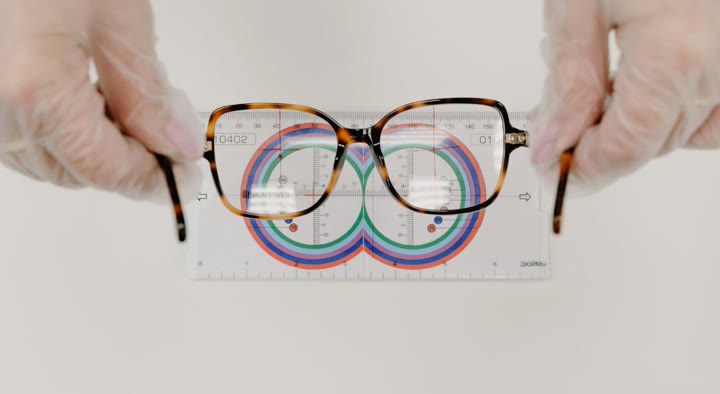
A frame's total width should sit within 2 to 3 mm of your face width, measured temple to temple at the widest point, where the arms pass. That is the only number that matters. Lens shape, colour, and brand sizing all sit on top of this one measurement.
Signs a frame is too wide
- The frame slides down your nose without help.
- The temples do not touch the sides of your head.
- The lenses extend past the edges of your face.
- The whole frame looks oversized in photos, even if you like the shape.
- Your pupils sit toward the nose side of each lens instead of near the centre.
Signs a frame is too narrow
- The temples press and splay outward instead of running straight back.
- The frame perches forward on your nose rather than sitting flush.
- Red marks appear at your temples after a few hours.
- Your face looks wider than it is, because the frame is squeezed onto it.
Finding the total width when it is not printed
Most product pages do not list total width. When one does, use it directly. Otherwise, estimate it from the size stamp inside the temple arm: two lens widths, plus the bridge width, plus about 12 mm for the hinges and rims. A stamp reading 54□17 140 gives 54 + 54 + 17 + 12 = 137 mm.
The same trick works in reverse. If a pair you already own fits well, read its stamp and use that total width as your target for the next pair.
Matching width to face size
Adult face width mostly runs from about 125 to 150 mm. These ranges are a starting point, not a hard rule, and they cover face width, suggested total frame width, and the lens width that usually gets you there.
| Face width | Suggested total frame width | Typical lens width |
|---|---|---|
| Under 130 mm (narrow) | 126 to 132 mm | 46 to 50 mm |
| 130 to 140 mm (medium) | 128 to 142 mm | 50 to 54 mm |
| Over 140 mm (wide) | 138 to 150 mm or more | 54 to 58 mm |
If your face width sits near the edge of a bucket, use the total width figure over the label. A 139 mm face is not meaningfully different from a 141 mm face, even though one falls in "medium" and the other in "wide". For a fuller look at sizing past 140 mm, see our guide to glasses for wide faces.
How to measure your face width
Stand in front of a mirror. Hold a ruler flat across your face at temple level, where the arms of a pair of glasses would pass, and read the distance from one temple to the other. This is the widest point of most faces. A depth scan gives the same number to about 1 mm, without the ruler wobble.
Width and style
Width is not only a comfort number. It changes how a frame looks. A frame slightly wider than your face can balance a long face by adding width where the face has none. A frame narrower than your face does the opposite: it squeezes in, and your cheeks read as wider by contrast. The simplest visual check is your pupils. They should sit near the horizontal centre of each lens. If they sit toward the nose side, the frame is too wide for you, whatever the label says.
What you can and cannot fix afterwards
An optician can adjust a frame that is close but not quite right. Bending the temples in or out moves the effective width by a millimetre or two. That is enough to fix a slight perch or a slight slide. It is not enough to fix a frame that is 10 mm too wide or too narrow. Get the size close before you buy, and let adjustment handle the rest.
SpecFit measures your face width with the iPhone depth camera. The measurement is free and given in real millimetres. Paste a link to any glasses and the fit check scores its width against your face, free. Rendering the frame on your own photo costs one credit.

Questions
How do I know if glasses are too wide for my face?
The frame slides down your nose, the temples do not touch the sides of your head, and the lenses stick out past your face. In photos it looks oversized, and your pupils sit toward the nose side of each lens instead of near the centre.
How wide should glasses be for my face?
Within about 2 to 3 mm of your face width, measured temple to temple at the widest point. Wider, and the frame slides and looks oversized. Narrower, and the temples press and the frame perches forward.
How do I measure my face width for glasses?
Hold a ruler flat across your face at temple level, where the arms of your glasses would pass, and read the distance from one temple to the other. A depth scan gives the same number to about 1 mm.
Can an optician fix a frame that is the wrong width?
Only within a few millimetres. Temple bends handle small width errors. A frame that is much too wide or too narrow needs a different size, not an adjustment.